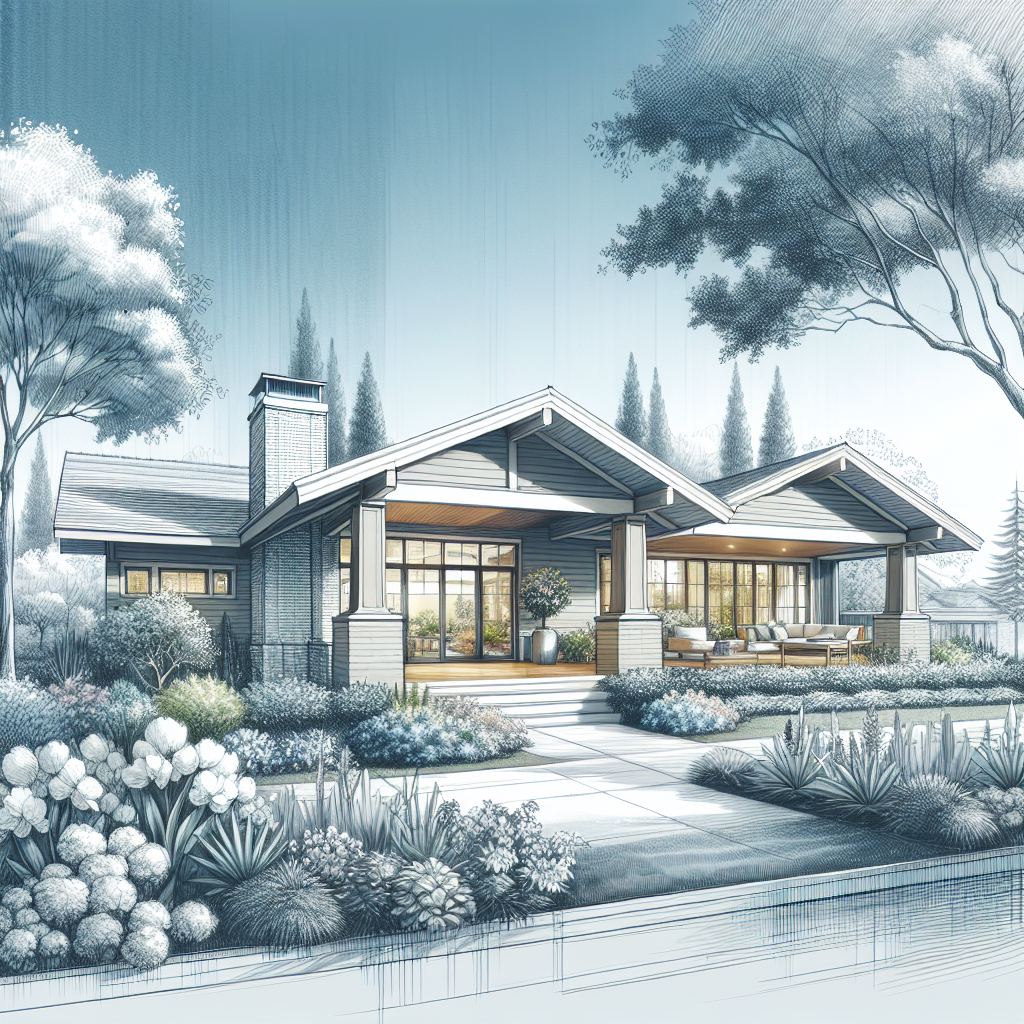
Across countless neighborhoods nationwide, ranch-style houses quietly dot the landscape, cherished by many modern-day homeowners. Old-school charm and contemporary iterations alike demonstrate the enduring appeal of this architectural favorite.
Let’s dive deeper into the essence of this straightforward yet highly practical home design.
Decoding the Ranch-Style Dwelling
Typically, a ranch house sprawls on a single floor, flaunting an open layout that maximizes usable space. Its footprint often stretches wider than it does deep, commonly adopting L or U configurations crowned with gently sloped roofs.
According to Joe Dickerson, a realtor and founder of the Joe Dickerson Group in Oakland, California, ranch homes excel due to their fluid access throughout the residence.
“In my region, properties with seamless indoor-to-outdoor transitions, especially flowing into backyards, catch the eye,” Dickerson notes. “These layouts cleverly separate bedrooms from communal zones via hallways for added structure.”
Open-concept living, dining, and kitchen spaces meld into expansive common rooms in these houses, with walls rarely interrupting the flow. Sliding glass doors frequently open onto patios, inviting the outdoors inside.
Most ranch houses rest on concrete slabs, although basements or crawl spaces occasionally appear. Architect Cliff May, credited with pioneering the original ranch home design in 1930s California, intended for these homes to foster relaxed outdoor living.
Exploring Ranch Home Variants
Since May’s era nearly a century ago, the ranch style has spawned numerous variants. While all maintain the hallmark open plans, flat profiles, and emphasis on outdoor connectivity, subtle distinctions distinguish each subtype:
California Ranch
The archetype May crafted, often infused with Spanish design elements. Folks sometimes blur the lines between California ranch and suburban ranch styles.
Raised Ranch
Also known as split-entry homes, these boast two levels: one at ground or slab height, another elevated. Entry occurs on a midway landing, with short staircases ascending or descending.
Split-Level Ranch
Similar to the raised ranch but with three floors instead. The central level houses kitchens and living spaces, with stairways branching downward and upward to additional rooms and bedrooms respectively.
Storybook Ranch
Whimsical in nature, these ranches evoke fairytale cottages complete with steep gables, ornamental shingles, and charming chimneys. Originated in California, they add fantasy flair to the ranch genre.
Suburban Ranch
Post-WWII suburban expansion popularized these simple, easy-to-build homes, ideal for large-scale developments beyond urban centers. Their exteriors tend toward plainness, supported by concrete foundations and airy interiors.
Quick fact: Ranch homes typically range from about 700 to over 3,000 square feet, showing considerable regional variation depending on land availability and homeowner preference.
Weighing the Perks and Pitfalls of Ranch Living
Advantages
- Low upkeep: Single-level designs simplify maintenance chores—no need to climb ladders for gutters or exterior fixes atop multiple stories.
- Accessibility wins: Ideal for seniors, disabled individuals, or anyone with mobility constraints, ranch homes allow effortless movement throughout.
- Safety edge: In emergencies like fires, having everything on one floor expedites evacuation and removes risks linked to steep staircases, a boon for families with young kids.
Drawbacks
- Privacy can suffer: With bedrooms and living quarters sharing one plane, some homeowners find the lack of separation a downside, especially if they value distinct spaces for dining or lounging.
- Yard space shrinks: Ranch designs often spread horizontally, which can limit outdoor green areas. This might be a downside for garden enthusiasts, pet owners, or families craving vast lawns.
- Costly expansions: Scaling up a ranch home often proves pricier than adding vertical space, since enlargements require broader land use rather than building upwards.
Ideal Candidates for Ranch Homes
From singles and couples to families with children, ranch layouts have something for nearly everyone who values single-story living. Their open interiors and smooth flow between indoor and outdoor spaces attract those craving simplicity and comfort without stairs.
How Do Ranch Homes Stack Up Among Other Housing Options?
- Condos: Perfect for those seeking low-maintenance lifestyles, added security, and community buzz.
- Single-family homes: Favored by families wanting expansive yards and abundant room.
- Bungalows: Popular among retirees and young families, usually 1,000–2,000 square feet, offering no-stair layouts without the upkeep of larger properties.
- Patio homes: Typically one-and-a-half stories with communal associations, these suit owners wary of stairs or exterior maintenance.
Reach out to real estate pros who can help assess whether a ranch house suits your lifestyle, budget, and space needs. Regardless of your choice, expert guidance ensures you find a home that feels just right.